Chapter 03 — Dressing
The Art of Formal Dressing
A men’s formal shirt styling guide in ten chapters
Good formal dressing is not a talent. It is a set of decisions made in the right order. This guide walks through them, from choosing the shirt itself to avoiding the mistakes that quietly undo an otherwise good outfit, with real-world scenarios along the way.
How to choose the right formal shirt
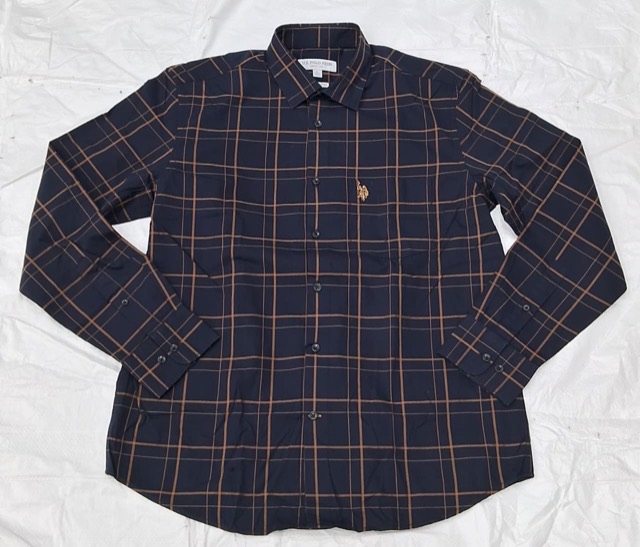
Start with the occasion, not the shirt. Ask three questions: how formal is the setting, will I wear a jacket, and will I wear a tie? A formal setting with a jacket and tie calls for a smooth fabric in a pale colour with a structured collar. A relaxed office with no jacket calls for something more forgiving: a softer collar, a textured weave, perhaps a button-down.
Next, consider your build. Taller, slimmer men can carry bolder stripes and checks; broader men often look best in finer patterns and medium-to-dark colours. Then check the fit, then the fabric, and only then fall in love with the colour.
Understanding shirt fits
Most formal shirts come in three broad fits. Slim fit follows the body closely and suits lean frames. Tailored or semi-fitted shirts take in the waist a little while leaving room in the chest, which suits most builds. Regular fit offers generous ease for comfort and movement.
Fit names vary from maker to maker, so trust the mirror over the label. Sit down, reach forward, and lift your arms. If the buttons strain, size up or choose a fuller cut. If fabric balloons above your belt, choose a slimmer one.
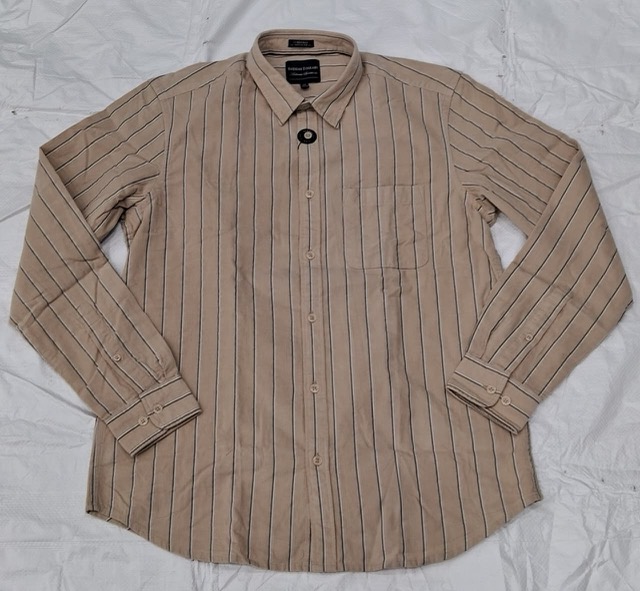
Matching shirts with formal trousers
The general principle: the shirt should be lighter than the trousers. Light shirts over darker trousers create a grounded, traditional silhouette. Reversing that order, a dark shirt with pale trousers, is more fashion-led and usually less formal.
| Trousers | Shirts that work | Formality |
|---|---|---|
| Charcoal | White, pale blue, lilac, pink, fine grey stripe | High |
| Navy | White, sky blue, blue stripe, light pink | High |
| Mid-grey | White, blue, burgundy, navy | Medium–high |
| Khaki / beige | White, blue, navy, olive, brown stripe | Medium |
| Olive | White, cream, light blue, rust | Medium–low |
Choosing appropriate colours
Colour sends signals. White says formality and attention to detail; blue says reliability; pink and lilac say confidence; deep tones such as burgundy and aubergine say evening. In conservative settings, keep strong colours to the tie and keep the shirt pale.
Consider light, too. Under bright office lighting, very saturated colours can look harsh, while soft, slightly dusty shades read as more refined. In daylight, warmer colours such as coral and rust look natural and relaxed.
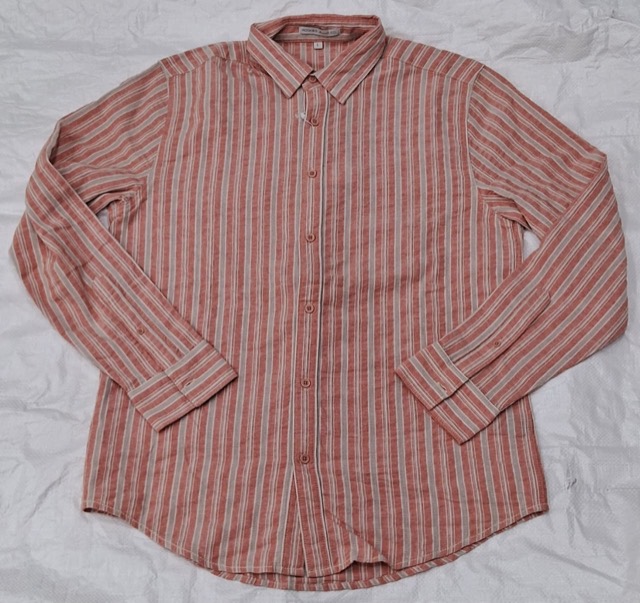
Coordinating shirts with blazers
A blazer frames the shirt, so the two must agree on scale. If the blazer has a pattern, choose a shirt with a smaller pattern or none at all. If the shirt is checked, a solid blazer keeps the look calm.
Navy blazers are the most forgiving partner, working with white, blue, pink, check and stripe. Grey blazers favour cooler shirts; brown and olive blazers favour warm ones: cream, ecru, rust and light blue.
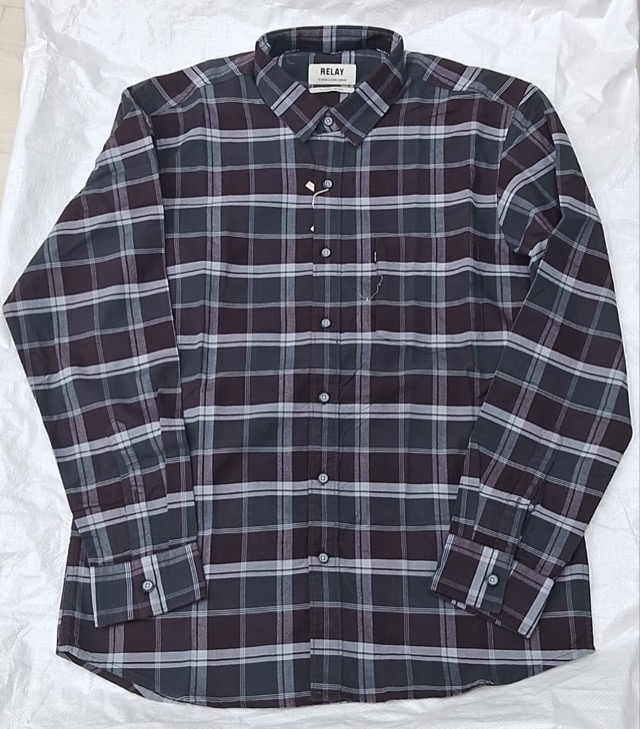
Matching collars with ties
- Point collar
- Narrow gap between the points. Best with slim ties and a four-in-hand knot.
- Semi-spread
- The all-rounder. Suits most faces, most ties and most knots.
- Spread / cutaway
- Wide opening that needs a fuller knot, such as a half-Windsor, to fill the space.
- Button-down
- Relaxed by nature. Wear with knitted ties or without a tie at all.
- Band collar
- No points, no tie. A clean alternative for evening and creative settings.
Formal dressing for meetings
Dress one step above the people you are meeting, never two. If the client wears open collars, wear a jacket without a tie; if they wear suits, wear a suit. The aim is to show respect without creating distance.
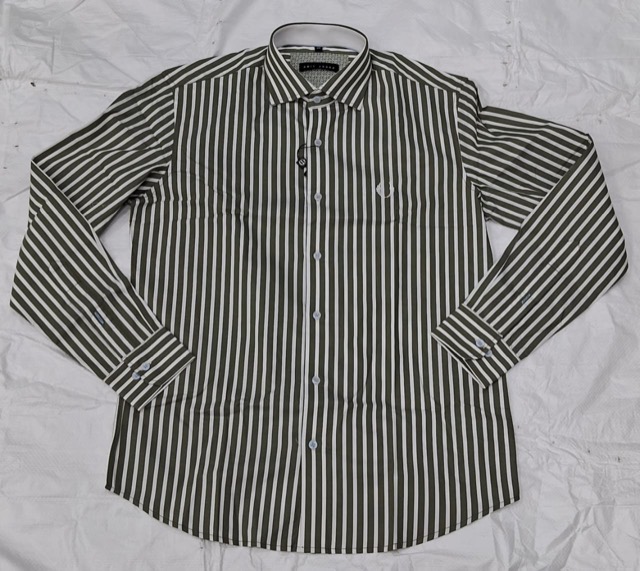
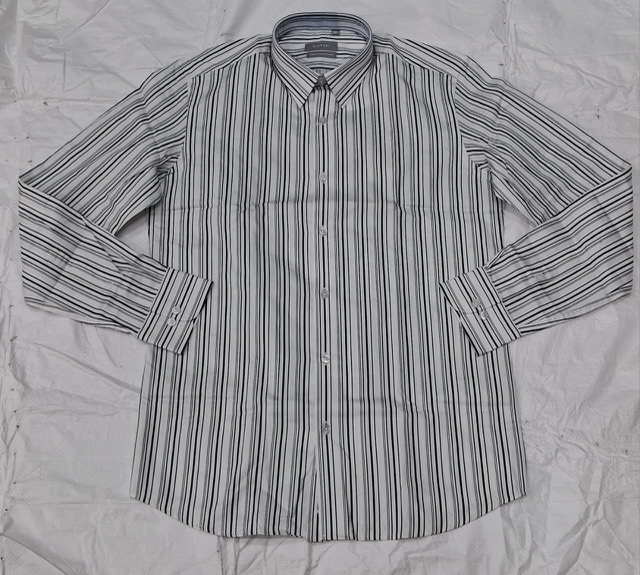
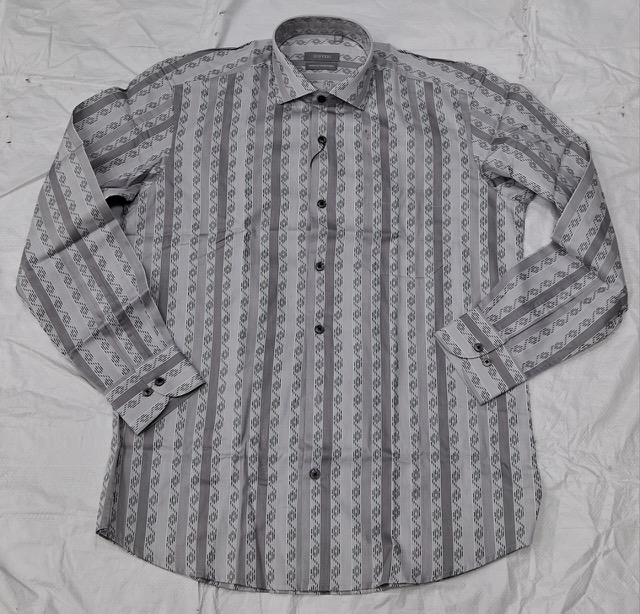
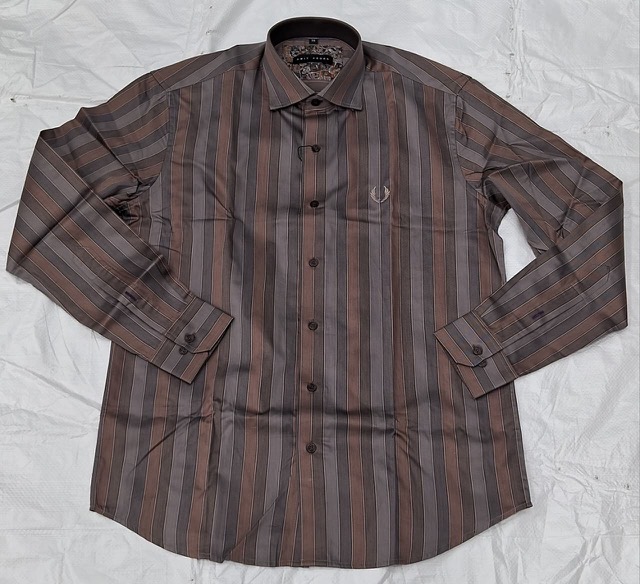
Choose shirts that hold their shape through a day of sitting: fabrics that resist creasing, collars with stays, and a length that keeps the shirt tucked. A textured stripe, like the grey one shown, hides the creases of a long meeting better than a flat, smooth cloth.
Business-casual combinations
Business casual is the most misunderstood dress code. It does not mean casual; it means formal clothes with one or two elements relaxed. Lose the tie, or the jacket, or swap smooth fabrics for textured ones, but not all three at once.
- Oxford or textured shirt, chinos, unstructured blazer, loafers
- Fine-check shirt, grey trousers, merino crew-neck layered over
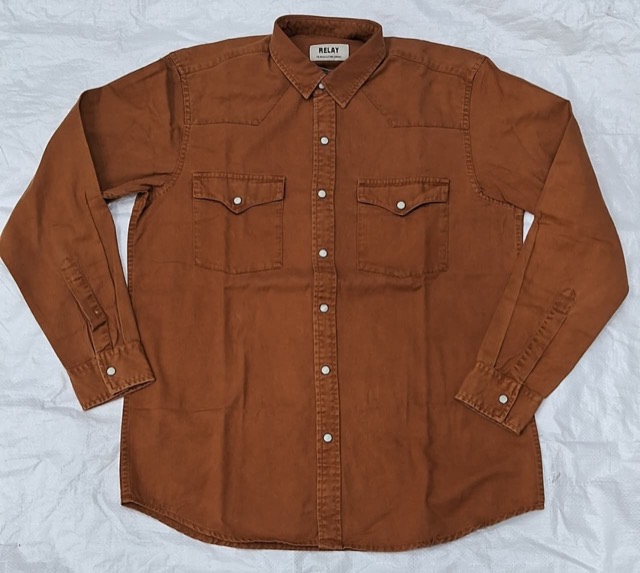
- Utility shirt worn open over a fine knit, dark trousers, suede derbies
Professional wardrobe essentials
Beyond the core of white and blue shirts, a professional wardrobe benefits from a few dependable stripes in different weights. Stripes add variety without risk, and each width suits a slightly different setting.
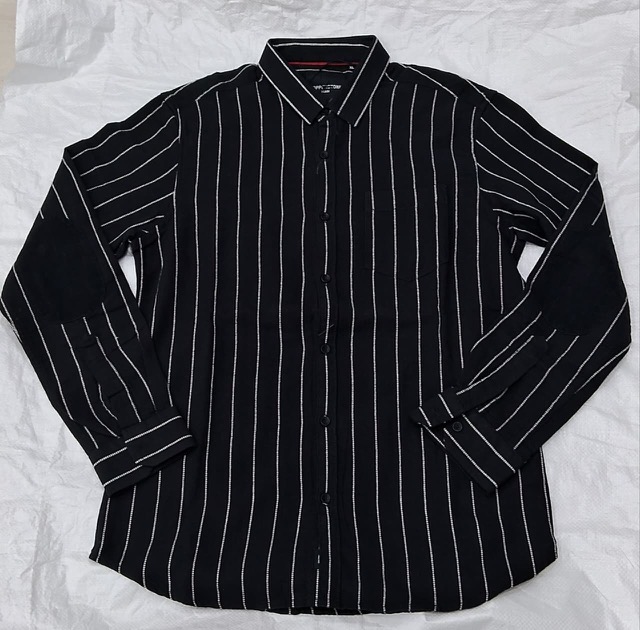
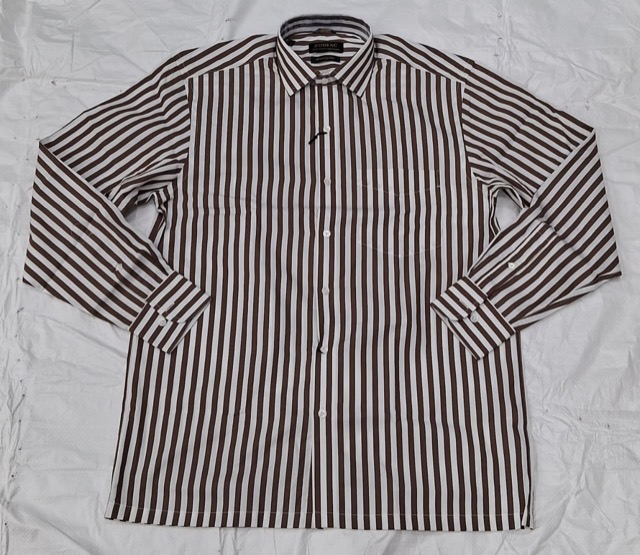
Add two pairs of well-fitting trousers in charcoal and navy, one pair in a lighter neutral, a navy blazer, a pair of black and a pair of brown leather shoes, and two belts to match. That small capsule supports dozens of combinations.
Common formal dressing mistakes
- Sleeves that are too long. Excess fabric bunches at the wrist and makes the whole shirt look borrowed.
- A collar that is too tight or too loose. Both are visible from across a room.
- Pattern on pattern at the same scale. A striped shirt with a tie of the same stripe width vibrates.
- Ignoring the undershirt. A visible vest line under a fine white shirt spoils the effect; choose a skin-toned, close-fitting layer.
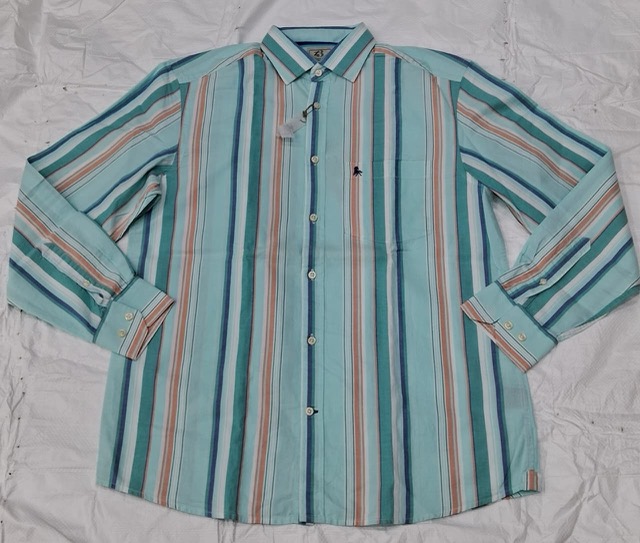
- Loud colour in conservative rooms. Bright multi-stripes are wonderful at the weekend, less so in front of a credit committee.
- Wrinkles and shine. Pressing matters as much as purchasing.